


Cheval des Andes
Cheval des Andes
Out of stock
Couldn't load pickup availability
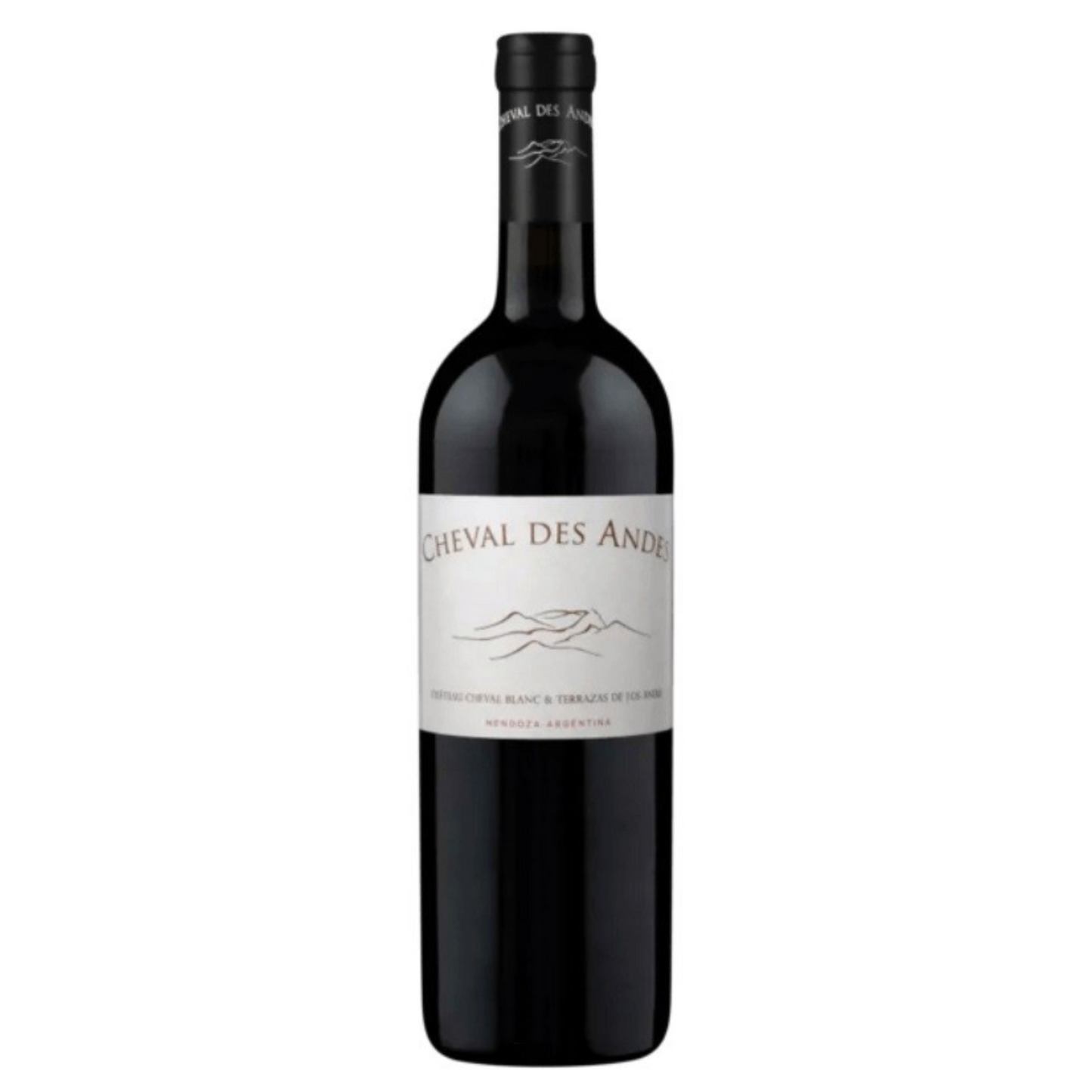
The style of Cheval des Andes is unique in Argentina, as it reveals the freshness and elegance of the terroir through blends inspired by Cheval Blanc, with great cellaring potential and complexity. The wine of Cheval des Andes combines the vibrant and intense expression of Argentinian Malbec with the rigour, elegance and savoir-faire of a great Bordeaux. It is a unique blend of Malbec grapes and Bordeaux varietals – an ensemble with the exuberance of Malbec balanced by the temperance of Cabernet Sauvignon, completed with hints of Petit Verdot.
These wines are elegant, meaning they are the most refined expression of the terroir of Mendoza. On the nose, they are complex rather than intense and on the palate, they are balanced rather than powerful.
On the palate, the balance of this wine is predominant. A supple and fresh attack add a lovely liveliness. Soft, precise tannins bring an attractive structure with an elegant finish.
Wine Advocate 97: The 2021 Cheval des Andes is seductive and savory on the nose, leading with pure, earth-tinged aromas of pipe tobacco, turned soil, dried herbs and rich yet composed dark fruits. Exotic, dark spice notes and a pleasantly integrated framing of new oak accents appear with further aeration. The palate is deliciously supple and impressively layered, with a harmonious, long and ever-expanding finish that highlights extreme delicacy. The tannins are persistent yet composed, gently yet persistently lengthening the finish and melding nicely with the vibrant acidity underneath—a beautiful combination of savory charm, serious depth and focused intensity. It's a blend of 49% Cabernet Sauvignon, 48% Malbec and 3% Petite Verdot that spent an average of 12-13 months in 50% barrique, 30% demi-muid and 20% foudre.
James Suckling 98: Complex aromas of blueberries, pie crust, fresh flowers and currant bush with hints of baking spices like nutmeg. Medium- to full-bodied with extremely fine tannins that are integrated and gorgeous. Graceful and refined, with super length. Interestingly, 20% of the wine was aged in large oak casks (2,500 liters), mostly from Slovenia. Try after 2027 but a joy to taste now.
Wine Advocate 94: 2012 was a warmer vintage but they harvested earlier to preserve freshness. The 2012 Cheval des Andes has more floral notes (that they attribute to the early picking) violets and lilies. While the blackberries and blackcurrants are there, they do not overpower the nose. In this vintage the final blend (which changes every year, they have no rules) was 64% Malbec, 28% Cabernet Sauvignon (a higher percentage to provide freshness in this warmer vintage) and then 8% Petit Verdot. This is a hedonistic Cheval showing the character of the vintage but with better balance and more integrated oak than in the earlier releases. They reduced the percentage of new oak to 30% and also started experimenting with some 500-liter barrels that were widely used in 2014, and the aging was longer at 14 months. The palate is powerful, and to drink at around 15 C. It gets more depth and nuanced with time in the glass. Even if young, this is polished and can be drunk starting now. 68,000 bottles were produced in 2012.
James Suckling 97: One of the most complex and floral Chevals. Full to medium body, ultra-fine. How I tasted.
Vinous 93+: (a joint venture between Cheval Blanc and Terrazas de los Andes): Bright ruby-red. Highly complex nose and palate meld currant, plum, licorice, mocha, tobacco, wild herbs and a sexy floral element. Utterly suave and seamless blend in the style of a ripe Right Bank wine, with saline soil tones leavening the wine's sweetness of fruit. One senses the 15% alcohol on the finish of this very long, firmly tannic, classically dry wine, which needs a couple more years in the bottle to come into full focus. My sample improved dramatically over 24 hours in the recorked bottle, showing purer fruit character without any loss of energy.
Wine Advocate 97: The 2014 Cheval des Andes is a different blend than previous years and contains a high percentage of Malbec and more Petit Verdot than Cabernet Sauvignon. This reflects the strict selection they had to do in a rainy year that was very challenging for Cabernet Sauvignon, especially in certain parts of the traditional vine-growing regions of Mendoza. The final breakdown of the blend is 83% Malbec, 9% Petit Verdot and 8% Cabernet Sauvignon. It is from the first of a series of three wet vintages where they see lower temperatures as an advantage to get where they want to go. They are more after elegance, freshness and complexity rather than power. In this vintage, they only used 15% new oak for the élevage in order to preserve the fresh aromatic expression of Malbec, and the aging lasted 15 months. It's incredibly fresh and floral, superbly balanced and very charming. This is the year with the most Malbec ever; it was an accident, but it was the kind of Malbec they like. They generally aim to have more Cabernet in the blend, but that wasn't possible in this low-yielding vintage. The palate is very balanced and elegant, with very good freshness and some restraint, not alcoholic or sweet at all. They find a lot of similarities with 2014 in Bordeaux—classical, fresh, quite transparent and juicy but precise. This has to be the best Cheval des Andes I've tried so far. They tell me this is the first vintage that really follows the style they want to produce in Argentina, with balance, complexity and freshness, away from high alcohol, extraction, oak and excess. The style will be slightly different since there will be more Cabernet Sauvignon, and their final target might be around 50/50 Malbec and Cabernet Sauvignon. 31,116 bottles, 845 magnums and 50 jeroboams were filled in December 2015.
James Suckling 95: A rich and round-textured red with gentle tannins and a flavorful finish. Full-bodied, round and succulent. This is 84% malbec and the rest is cabernet sauvignon and petit verdot. Drink now.
Vinous 93: (14.6% alcohol; just 15% new oak; 100% from estate vines, about three-quarters from the rockiest portion of the company's Las Compuertas vineyard and the rest from Altamira): Bright ruby-red. Very fresh black and blue fruits, menthol, spices and licorice on the nose and palate, complicated by mint, minerals and medicinal herbs (the Cabernet Sauvignon is apparent here). Still a baby but already displays a Malbec juiciness and firm underlying structure. Suave in texture, offering noteworthy delicacy and clarity. Winemaker Lorenzo Pasquini cut back substantially on new oak in 2014 (he normally uses 30% to 50%) and used only French barrels. Not a large- scaled wine but refreshing, suave, complex and intense, with lovely cut. Finishes with excellent spicy length, round tannins and hints of licorice and black olive.
Decanter 91: The 2014 is made by the Cheval-Blanc team. With a peppery nose, the bouquet is reminiscent of northern Rhône and the Syrah grape. Precise and noble acidity on the palate, along with a minty note that emerges after aeration. The sumptuous mouthfeel is energized, while the finish is long, liquorice-infused, and elevated by an ethereal airiness. Enjoy for the next 10 years.
Wine Enthusiast 92: Jammy berry aromas combined with fine oak result in nuances of chocolate, forest floor, mushroom and cool earth. This Malbec-heavy blend comes out screaming with tannins and tartaric bite. Big flavors of black plum, blackberry and vanilla spread out over a wide but youthful finish. Give this more time to integrate and settle; best from 2020–2026.
Wine Advocate 98: The 2019 Cheval des Andes has a more reductive vinification and élevage, making the wine a bit shy and in need of time to open up, as one of their objectives was to make it more age-worthy. Another objective is to get to a 50/50 blend of Malbec and Cabernet Sauvignon, which they achieved in this vintage for the first time, going back to the initial character of the wine, which was the idea of Argentinean winemaker Roberto de la Mota; so, they are closing the circle and going back to the initial idea, with more suggestions from the Cheval Blanc team. This is the first vintage fully under the charge of the new French winemaker, Gerald Gabillet, who fermented by plot, isolating some specific parts of the vineyard, like the borders where you tend to get higher yields because of the irrigation. It matured in 225- and 400-liter oak barrels and in oak vats. They used more barrels and vats from Stockinger, which they like and rotate; the wine spends an average of 13 to 14 months in oak, but some lots get 11 months and others get 16. 2019 was a mild vintage, cooler than 2017 and warmer than 2018, with rain at the right time, which helped to avoid hydric stress, and without extremes (which they had in 2020 with three weeks of extreme heat). The wine is young and tender and a bit oaky, which Gabillet attributed to the reductiveness; it's ripe without excess, with around 14.2% alcohol, mellow acidity and velvety tannins. There's more Cabernet here, so the aromatic expression can be something between 2017 and 2018, but Cabernet marks the palate a lot and makes the wine more age-worthy, as it provides the structure and length that the Malbec lacks. So, the wine might be less accessible when young and should develop slowly in bottle. It's tasty and supple and has the ingredients and the balance for what they are aiming for. In the following vintages, they follow this path, and Gabillet feels that having more precision allows the wines to reflect the differences between vintages better. They produce around 100,000 bottles. It was bottled in late January 2021. The way they want to describe the wine is the Argentinean expression of Cheval Blanc. And I can only agree.
James Suckling 97: A refined but spicy Cheval, showing charcoal, blueberries, wild herbs, lavender and hints of bacon and cedar. Medium to full body with extremely fine tannins that get dialed into the fruit with violet, spices and sweet blue fruit at the end. Long and subtle. Drink or hold.
Vinous 97: The 2019 Cheval des Andes is a 50/50 blend of Malbec and Cabernet Sauvignon from Las Compuertas and Paraje Altamira, Mendoza. The 2019 was 40% aged in 225-liter barrels, 40% in 500-liter barrels and 20% in foudres. It's red with violet flecks in the glass. It has a fresh nose of plum and blackcurrant accompanied by hints of white pepper, mint and violets over a bed of cedar and sandalwood. On the palate, the feel is finely grained with a leaner, more agile flow than in previous years, while the freshness brings plenty of energy before the lengthy finish of fruit and country herb aromas.
Wine Advocate 97+: Soon to be released through La Place de Bordeaux, the 2022 Cheval des Andes opens with an exotic, spice-driven bouquet, supplemented by lifted herbal notes and a vibrantly red-fruited and perfumed backdrop. The palate is similarly energetic, melding an elegantly rich, polished texture with a slender, tensile energy. It concludes with a long, persistent and high-toned finish that gradually unfurls a sturdy structure of supremely refined tannins. This is an excellent counterpoint to the comparatively darker and more open-knit 2021, showcasing a brighter, more tenacious profile while sacrificing none of the grace, nuance and textural attention to detail that has come to define Cheval des Andes. It's a blend of 65% Cabernet Sauvignon, 30% Malbec and 5% Petit Verdot.
James Suckling 98: Aromas of dark currants, spices, cloves and a touch of elderberries. The palate is elegant and medium- to full-bodied with polished, precise tannins, firm fruit, a juicy backbone and a solid and flavorful finish. 65% cabernet sauvignon and 35% malbec from Lujan and Altamira. Drink from 2027.
Vinous 99: The 2022 Cheval des Andes is a significant upgrade to Mendoza's historic regional blends, combining grapes from Las Compuertas (Luján de Cuyo) and Paraje Altamira (Uco Valley). The 2022 vintage allowed for a slower ripening of Cabernet Sauvignon, which take prominence in this blend alongside 30% Malbec and 5% Petit Verdot. Aging was carried out in 40% 225-liter Bordeaux barrels, 35% 400-liter barrels and 25% 2,500-liter foudres, with 50% new oak. A bouquet of bright fruit-raspberry, blueberry and delicate cassis-and complementary bay leaf and mint tones give way to a touch of ash and mild bell pepper. Boasting serious concentration, fine tannins and a slight creaminess, the 2022 has a structure that is firm but never tight, maintaining weight without losing balance. The finish is long, energetic and full of flavor. This is an exceptionally beautiful wine.
Decanter 97: Earthy, savoury nose full of wet soil, peppercorns and blackcurrants alongside violets, chocolate, cherries and raspberries. Well crafted, such a svelte and streamlined expression with real charm and finesse. There's power for sure but it's funnelled into one line from start to finish. I love the brightness and opulence here yet there's super charm and precision too. Great energy, succulence and vibrancy with natural acidity creating a salivating effect that makes you want to come back for another glass. Expertly made with an accumulation of details that make it so enjoyable. The joint project of Château Cheval Blanc and Terrazas de los Andes. Winemaker Gérald Gabillet.