



Pavillon Rouge du Chateau Margaux
Pavillon Rouge du Chateau Margaux
Low stock
Couldn't load pickup availability


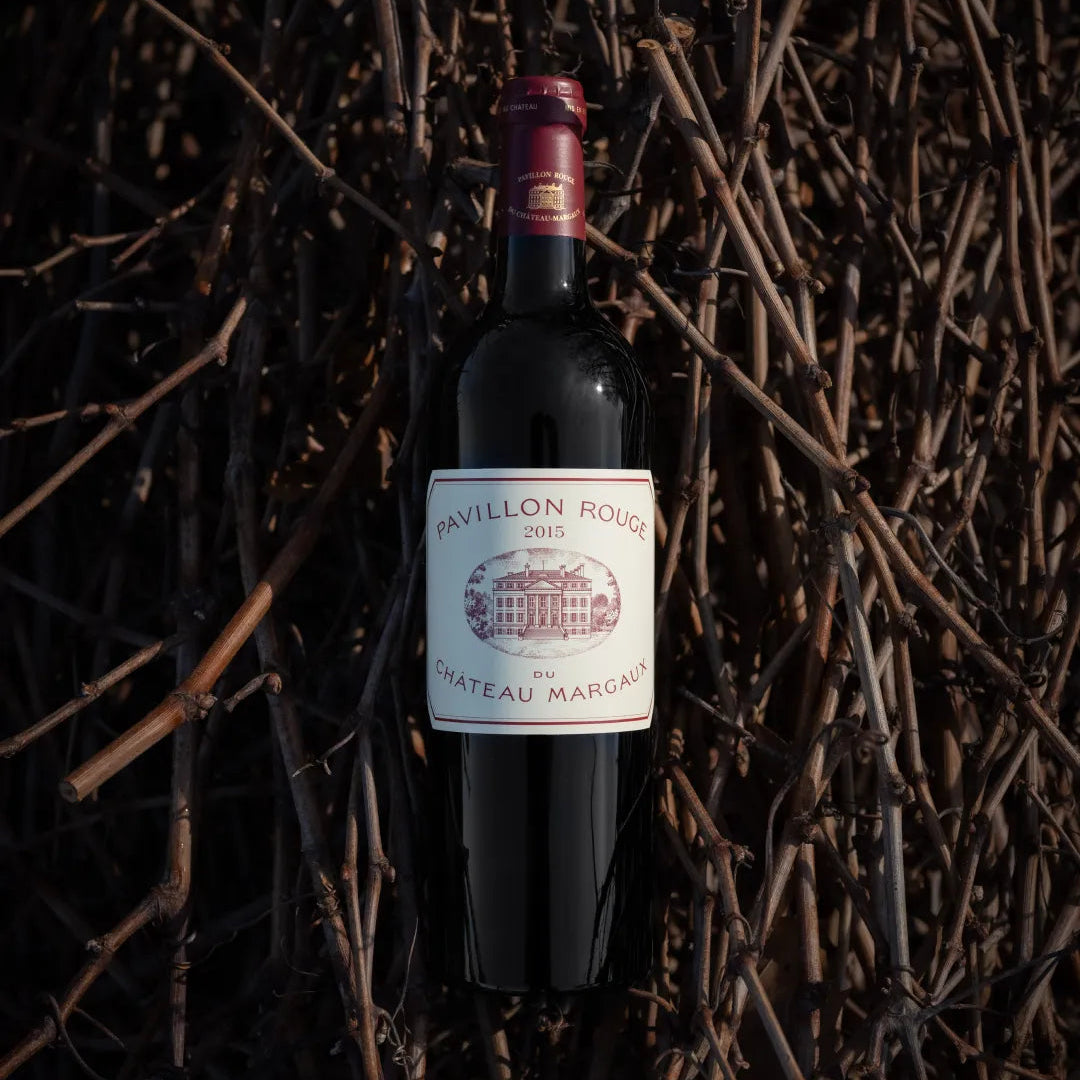
The production of a second wine probably goes back to the beginning of the XVII century because it is inseparable from the search for excellence which started at that time. Sold under the name of “Château Margaux 2nd wine”, it took its permanent name of Pavillon Rouge du Château Margaux in 1908. After an eclipse between the thirties and the mid-seventies, its production restarted on the arrival of André Mentzelopoulos in 1977 and at first greatly increased in order to improve the quality of the first wine. From the mid – 1990s, the creation of a third wine in its turn, allowed for a more and more rigorous selection for Pavillon Rouge. For a few years now, a third of the harvest has gone into the first wine, barely 30% into the Pavillon Rouge, and the remainder is divided between the third and fourth wines.
The quality of Pavillon Rouge has become very close to that of the first wine because all the plots involved contributed to the blending of Château Margaux not so long ago. Of course there isn’t the same complexity, the same depth, the same “magic” but the flavours are close and the balance in the mouth leads to the same subtle senses of power and softness. In general it is ready to drink a little earlier whilst retaining an excellent potential to age largely beyond 30 or 40 years.
The Smart Money's Margaux - Read Full Blog Here
Wine Advocate 91+: Deep garnet in color, the 2010 Pavillon Rouge du Chateau Margaux offers up scents of blackcurrant cordial, wild thyme and fertile loam with hints of cedar chest, pencil lead and tar. Medium-bodied, the palate is just a tad lean with chewy tannins and bold freshness, finishing on an herbal note.
James Suckling 96: This the greatest Pavillon Rouge ever made. Aromas of flowers, smoke, currants and raspberries follow through to a full body, with super silky tannins and a long, long finish. This is balanced and refined with wonderful depth. Hard to believe it's a second wine. Better after 2018.
Decanter 94: Now 11 years old, and bursting with layers. It's finessed and vibrant, packed with raspberry and black cherry fruits. Maintains its juiciness and well balanced structure from start to finish, showing still-muscular tannins but riven through with hints of tobacco, iris and rose. This is usually the window that you would expect to begin drinking a first wine, but here we are with Pavillon Rouge and it is just now softening and opening up - a great example of how not only the 2010 vintage but the terroir of the Château Margaux vineyard slows everything down. At this point, they were making both a third and a fourth selection, and for the first time that the Pavillon Rouge made up the same amount as the main wine at 38% of the crop. Can drink now or go longer. 60% new oak, harvest September 23 to October 15.
Decanter 92: Sage and rosemary spice on the nose, and in the glass the focus is on freshness rather than opulence, making it a great reflection of the vintage. Iris and violet notes as it opens, but it needs time in the glass, and there are touches of dried fruits. Will benefit from another few years in bottle to soften up, but there is a clear opulence to the fruit. 3.6pH. This was the year that Philippe Bascaules moved to Inglenook, Napa (he began on October 1 2011 in California so had done the whole harvest in Margaux first). One of the first years with a ruthless selection for Pavillon Rouge - 28% of overall production. The third wine had started in 2009, and will have had an impact.
Wine Advocate 90: The 2014 Pavillon Rouge is a blend of 77% Cabernet Sauvignon, 22% Merlot and 1% Petit Verdot. Bottled in July 2016, it remains quite rich and outgoing on the nose with copious red cherry, blackberry and spice-box aromas. With aeration it reveals a little more sous-bois, the oak nicely integrated. The palate is medium-bodied with a tightly knit opening. Certainly this has lost the corpulence that it showed in barrel, lost that puppy fat. Now the linearity comes through, engendered by the cool nights during the growing season, and still delivers that mineral-rich finish. I still maintain that it will need three years in bottle just to soften the tannins.
James Suckling 93: Love the fruit and juicy character to this second wine of Margaux. Medium to full body, superfine tannins and a long finish. The freshness and savory finish are a big plus. Drink in 2020.
Vinous 92: The 2014 Pavillon Rouge de Château Margaux has a crisp, precise, Pauillac-like bouquet with fine delineation, a touch of graphite infusing the black fruit, austere but rather compelling. The palate is medium-bodied with fine, quite supple tannin. I appreciate the balance and elegance of this Margaux, somewhat saline towards the finish with impressive precision. Very fine, very delicious. Tasted blind at the annual Southwold tasting.
Decanter 93: Lifted and fun, not weighty or plush at all, this is streamlined and linear, verging on austere but the initial red berry fruit continues alongside clear liquorice, chocolate and graphite touches. It's easy enjoyment for sure, stylish if not so confident and characterful. Just finishes a touch short, but the acidity is great as is the tannin management. All in light harmony, good with food, drink relatively soon.
Wine Advocate 91-93: The 2025 Pavillon Rouge is a serious, youthfully structured second wine, unwinding in the glass with notes of dark berry fruit mingled with notes of anise, licorice and petals. Medium- to full-bodied, supple and lively, with a deep, tightly wound core of primary fruit and a long, vibrant finish, it will reward a bit of patience. This year, Pavillon Rouge represents 28% of the harvest, and it's a blend of 70% Cabernet Sauvignon, 16% Merlot, 10% Petit Verdot and 4% Cabernet Franc. - William Kelley
Vinous 90-92: The 2025 Pavillon Rouge represents 28% of the volume this year, a little lower than previous years, containing just a little more Petit Verdot (10%), matured as usual in around 60% new oak, though my sample was taken from a new barrel. It has a bright nose, black cherries and blueberry fruit, crushed violet developing in the glass, a hint of black olive. The palate is medium-bodied, with a pleasing rondeur on the entry, a "pillowy" Pavillon Rouge at this stage, a pleasing countervailing bitterness that balances the opulence that comes through on the slightly briny finish. Less jagged than its peers, this will be quite tempting in its youth, yet it certainly has the substance to last. - Neal Martin
Decanter 96: Fresh prune, some balsamic notes, fresh rose petals. Fragrant and dark notes, a touch of spice, some soft minerality. Juicy and succulent – there’s acidity for sure but what stands out is the texture, so soft and creamy on the palate with bright but cool blueberry acidity, some liquorice spice, violet touches and a lot of graphite and pencil lead salinity on the finish. Clearly structured but so generous in terms of fruit purity. Quite a serious Pavillon. Started harvesting young vines on the 8 September, Merlots on 11th and Cabernets on 19th, finishing on the 29th. A yield of 22hl/ha. 3.68pH. 78IPT. 28% second wine production, usually 30%. 12% press wine. 4% Cabernet Franc completes the blend. - Georgina Hindle